



Across the organisations we work with, one challenge keeps coming up: time.
Teams are stretched. People are juggling competing priorities, day-to-day operational work, and constant interruptions. Most days feel less like steady progress and more like “putting out fires”. In that kind of environment, finding time for structured learning is becoming increasingly difficult.
The Way Training Used to Work
For a long time, training was built around a simple assumption: people could step away from their work, sit down, and complete a full session or online module in one go.
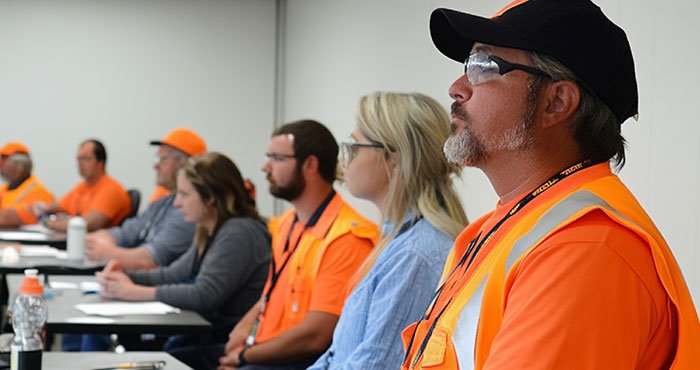
For most teams today, that’s no longer realistic.
Work doesn’t stop. Priorities shift. Interruptions happen. And long, uninterrupted blocks of focus are harder to come by than ever.
A Shift in How Learning Fits the Day
Because of this, many organisations are rethinking how training fits into the workday.
Instead of long sessions, there’s a move toward shorter, more focused learning that can be completed in smaller pockets of time. Content is being broken into manageable segments. Delivery is being simplified. Learning is easier to pause and return to when time allows.
The goal isn’t to make training smaller for the sake of it — it’s to make it usable.

Why Clarity Matters More Than Ever
When time is limited, patience for unnecessary information is low.
Training is increasingly being designed to get to the point quickly, focusing on what people actually need to know and apply in their role. Clear objectives, practical examples, and relevant content matter more than volume.
Less noise. More value.
The Role of Visual Learning
We’re also seeing a strong shift toward visual formats.
Short, focused video is proving effective for demonstrating key tasks, decisions, or behaviours. When people can see how something should be done, it reduces guesswork and helps learning stick. It also makes it easy to revisit when a refresher is needed — right at the moment of work.

Supporting Learning With the Right Tools
The platforms that support this kind of flexible learning are becoming just as important as the content itself.
Mobile‑friendly access, on‑demand availability, and simple navigation all make it easier for training to fit naturally into existing workflows, rather than competing with them.

Training That Respects Reality
What’s becoming clear is this: when training reflects the reality of the workday, engagement improves.
People are more likely to complete it, return to it, and apply it. In most cases, the issue isn’t the importance of training — it’s the way it’s designed.
Good training doesn’t ask people to step out of their world. It fits into it.