



How long should a training video be? It’s one of the first questions businesses ask when planning workplace training. A video that is too long can lose employees’ attention, while one that is too short may leave out information they need to perform their roles safely and confidently.
So, what is the best length for training videos by topic? There isn’t a one-size-fits-all answer. The ideal duration depends on the complexity of the subject, the audience and the learning outcome.
Some topics can be covered in a few minutes, while others need more time for demonstrations, examples or detailed explanations. The goal is to give employees the information they need without adding unnecessary content.

In this guide, we’ll look at suitable approaches for different workplace training topics and the factors that can help determine the right length for each one.
The Best Length for Training Videos by Topic: A Quick Overview
The ideal length depends on what the video needs to achieve:
- Induction training: Several short modules can make large amounts of information easier to complete and revisit.
- Safety training: Focused videos covering one procedure, hazard or task can make important information easier to understand.
- Software training: Short, step-by-step lessons allow employees to find and repeat specific tasks when needed.
- Compliance training: More detailed topics may require additional context, examples and practical scenarios.
- Leadership training: Longer discussions can allow greater depth for topics involving communication, decision-making and workplace relationships.
- Refresher training: Brief, targeted videos can reinforce existing knowledge and highlight important changes.
The right runtime should ultimately reflect the topic, audience and learning objective rather than a fixed number of minutes.
There Is No Perfect Video Length
Many articles suggest a single ideal duration for all training videos, but workplace learning rarely works that way.
Instead of asking only how long the video should be, consider:
- What should employees know after watching it?
- How complex is the topic?
- Does the content require demonstrations?
- Can the information be divided into smaller lessons?
A video’s effectiveness depends on how clearly it communicates the learning objective rather than the number of minutes on screen. Well-organised content can be more useful than a longer presentation filled with unnecessary detail.
Different Training Topics and Their Ideal Video Lengths
The right approach to video length can vary significantly depending on the type of training being delivered.
Induction Training Often Works Well as Short Modules
Employee induction can cover a wide range of information, including:
- Company values
- Workplace policies
- Site orientation
- Safety procedures
- Emergency contacts
- Team introductions
Trying to combine everything into one long video can overwhelm new employees.

Dividing the induction into several focused modules allows employees to complete individual topics without having to sit through information that may not be immediately relevant.
For example:
- Welcome and company overview
- Workplace health and safety
- Site facilities
- Employee expectations
- Emergency procedures
This structure also allows employees to revisit individual topics when required.
Safety Training Should Focus on Individual Procedures
Safety training is often most effective when each video concentrates on a specific process, hazard or task.
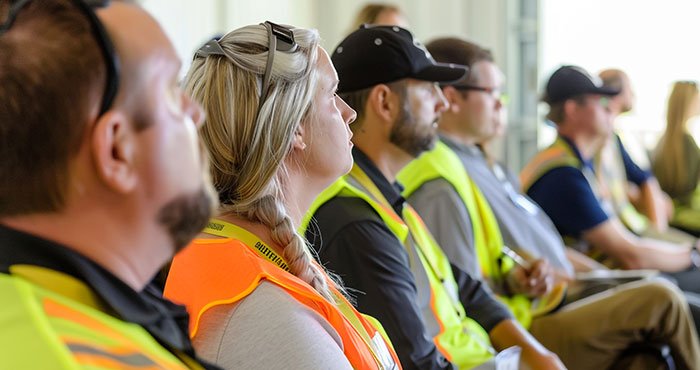
Examples include:
- Manual handling
- Lockout procedures
- Working at heights
- Personal protective equipment
- Hazard reporting
Keeping each lesson focused can reduce confusion and help employees locate information quickly during future refresher training.
Consider:
- Avoiding unrelated safety topics in the same video
- Demonstrating one procedure from beginning to end
- Reinforcing key actions before moving to the next subject
A focused safety video can be easier to understand and revisit than one covering multiple procedures at once.
Software Training Benefits From Step-by-Step Lessons
When teaching employees how to use software or digital systems, shorter instructional videos can make it easier to learn and revisit individual tasks.
Each lesson can focus on a specific activity, such as:
- Logging into the system
- Creating a new record
- Completing a workflow
- Generating reports
- Troubleshooting common issues
Employees can then return to the exact lesson they need without searching through a lengthy recording.
Breaking software training into logical sections can also make future updates easier when systems or processes change.
Compliance Training May Require More Detail
Compliance topics can involve legislation, workplace responsibilities and organisational procedures.
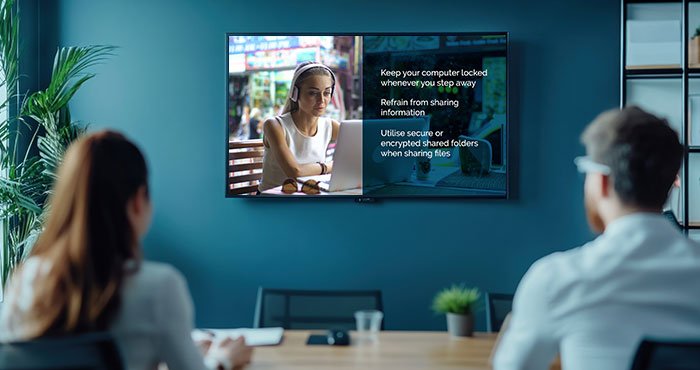
Examples include:
- Privacy obligations
- Workplace conduct
- Anti-discrimination policies
- Cybersecurity awareness
- Industry-specific compliance requirements
These subjects may require additional context to explain not only what employees should do, but also why those responsibilities matter.
Rather than removing important information simply to achieve a shorter runtime, focus on presenting complex topics in a logical sequence. Supporting graphics, examples and practical scenarios can help maintain attention when more detailed explanations are necessary.
Leadership and Professional Development Allow Greater Depth
Leadership development often involves discussion, reflection and critical thinking rather than a simple demonstration of a task.

Topics may include:
- Communication skills
- Conflict resolution
- Coaching techniques
- Team management
- Decision-making
These subjects can benefit from practical examples and workplace scenarios. Longer sessions may be appropriate when each section continues to provide meaningful value.
If a discussion naturally divides into separate themes, individual modules can provide greater flexibility and make the content easier to revisit.
Refresher Training Is Often Most Effective When Brief and Practical
Refresher training has a different purpose from initial instruction. Employees already understand the basics, so the focus is usually on reinforcing knowledge and highlighting important changes.

Effective refresher videos can focus on:
- Recent procedural updates
- Common mistakes
- Key reminders
- New workplace risks
- Seasonal safety issues
Because employees already have prior knowledge, concise updates may be enough to reinforce the information they need.
Consider:
- Highlighting what has changed
- Focusing on practical reminders
- Removing information employees already know
Short, targeted refresher videos can also make it easier for employees to complete training without revisiting an entire course.
How to Make Training Videos More Effective
Video length is only one part of creating effective workplace training. The structure, learning objective and way information is presented can have an equally important role.
Focus on Learning Outcomes, Not Runtime
The length of a training video matters less than what employees can understand and apply after watching it.

Use the learning objective, complexity of the topic and needs of the audience to determine how much time the content requires.
Before including a section, ask:
- Does this information help employees perform their job safely?
- Is this explanation necessary?
- Could this section become a separate module?
- Will employees benefit from seeing this example?
Removing unnecessary repetition can improve engagement without sacrificing important information.
Break Longer Training Topics Into Modules
Longer topics do not necessarily need to be compressed into one video. Breaking them into connected modules can make information easier to absorb and revisit.
For example:
Customer Service Training
- Module 1: Company service standards
- Module 2: Greeting customers
- Module 3: Handling complaints
- Module 4: Difficult conversations
- Module 5: Escalation procedures
Employees can complete modules progressively and return to individual topics when needed.
A modular structure can also simplify future updates because only the affected sections may need to be revised rather than the entire training program.
Measure Effectiveness Instead of Focusing on Runtime
The real question is not whether a training video is five, ten or twenty minutes long. What matters is whether employees:
- Understand the information
- Complete the training
- Apply the procedures correctly
- Retain knowledge over time
- Feel confident performing their tasks
These outcomes provide a more useful measure of training effectiveness than runtime alone. If a slightly longer video produces better understanding, it may be the more effective choice.
Final Thoughts
The best length for training videos depends on the topic, audience and learning objective rather than an arbitrary time limit. Simple procedures may work well as short, focused lessons, while more detailed subjects can require additional explanation, examples and demonstrations.

The aim should be to give employees the information they need in a format that is clear, relevant and easy to follow. By choosing an appropriate structure and making every section purposeful, organisations can create training videos that support better workplace learning without focusing solely on keeping them short.
Ready to Create Training Videos That Keep Employees Engaged?
At Channel 1 Creative Media, we help organisations produce professional training videos structured around real learning outcomes rather than arbitrary time limits. From planning the content and scripting each module to filming and post-production, we create workplace training that is clear, practical and tailored to your audience.
Call us on 0387430488 or visit our Contact Us page to discuss your next training video project. Our team can help you plan and produce training content that is suited to your topic, audience and learning objectives.